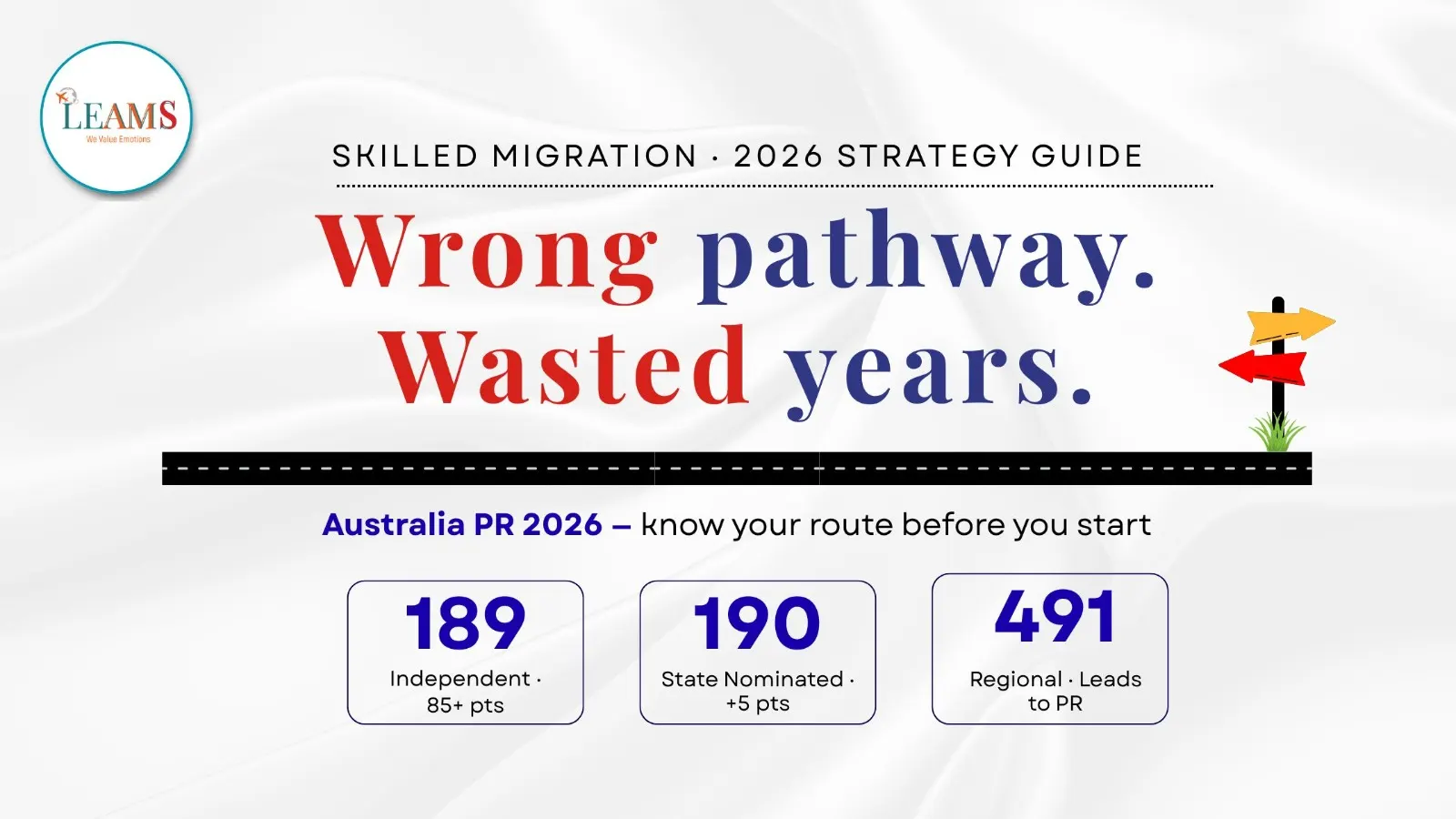
If you hold an Australian Skilled Work Regional (Provisional) visa (subclass 491) or a Skilled Employer Sponsored Regional (Provisional) visa (subclass 494), the Subclass 191 visa may be an important step towards permanent residency.
The Permanent Residence (Skilled Regional) visa (subclass 191) allows eligible visa holders to live and work in Australia permanently. However, holding a regional provisional visa alone does not automatically guarantee permanent residence. You must meet the applicable eligibility requirements and provide the required evidence.
This guide explains the Subclass 191 visa pathway, the three-year visa requirement, Australian tax documents, and the key points Indian applicants should understand before applying.
What Is the Subclass 191 Visa?
The Australian Subclass 191 visa is a permanent residence visa for eligible applicants, including people who hold or have held an eligible Subclass 491 or 494 visa. Under the Regional Provisional stream, applicants must have held an eligible visa for at least three years, complied with its conditions, and provided Australian Taxation Office notices of assessment for three income years out of the five years of their eligible visa. There is no minimum income requirement under the current official Regional Provisional stream rules.
1. What Is the Australia Subclass 191 Visa?
The Subclass 191 visa is officially called the Permanent Residence (Skilled Regional) visa. Its Regional Provisional stream provides a permanent residence pathway for eligible people who have lived and worked in designated regional areas of Australia while holding an eligible provisional visa.
Once granted, this visa allows you to live and work in Australia permanently, subject to the applicable visa conditions and Australian law. Eligible permanent residents may also be able to sponsor qualifying family members or pursue Australian citizenship later if they meet the separate requirements.
Important: Subclass 191 is not the same as a temporary regional visa. Subclasses 491 and 494 are provisional visas; Subclass 191 is the permanent residence stage.
Official source: Department of Home Affairs – Subclass 191
2. Who Can Apply for the Subclass 191 Visa?
The Regional Provisional stream is intended for eligible holders of these visas:
- Subclass 491: Skilled Work Regional (Provisional) visa.
- Subclass 494: Skilled Employer Sponsored Regional (Provisional) visa.
You must have held an eligible visa for at least three years before applying. You must also have complied with the conditions of your eligible visa throughout the relevant period.
The Department assesses applications against the applicable requirements, so completing three years on a provisional visa does not by itself guarantee approval. Health, character and other relevant visa criteria must also be considered.
If you are currently in India and have not held an eligible Subclass 491 or 494 visa, you generally cannot use the Regional Provisional stream as a direct first-step PR application. You would need to explore an appropriate pathway to an eligible visa first.
Official sources: Subclass 191 Regional Provisional stream and Subclass 491 visa.
3. The Three-Year Visa Requirement
One of the most important requirements is holding an eligible Subclass 491 or 494 visa for at least three years before applying.
During your eligible visa period, you must comply with the relevant visa conditions. For Subclass 491 holders, this includes following the conditions governing residence, work and study in designated regional areas.
Do not assume that simply living in Australia for three years is sufficient. Your visa history, compliance record and supporting documents matter.
Before planning your application, review your visa grant letter, check your visa conditions, and retain evidence of your residence and work history.
4. Do You Need to Meet a Minimum Income Requirement?
The current official Regional Provisional stream page states that there is no minimum income requirement for Subclass 191.
However, this does not mean you can ignore your tax records.
Applicants must provide Australian Taxation Office (ATO) notices of assessment for three income years out of the five years of their eligible visa. These documents are part of the evidence required under the current rules.
If you or a family member owes money to the ATO, the Department advises providing evidence that the debt has been repaid or that an approved payment plan is in place, to help avoid processing delays.
As requirements can change, always consult the official Subclass 191 page before lodging your application.
5. Documents You May Need
Prepare documents according to your individual circumstances and the Department's current application instructions.
Commonly relevant evidence includes:
- Current passport and identity documents.
- Details and evidence of your eligible Subclass 491 or 494 visa history.
- ATO notices of assessment for the required income years.
- Evidence of residence in a designated regional area, where requested.
- Work or study evidence, where relevant to demonstrating your circumstances and compliance.
- Documents relating to accompanying family members, if applicable.
- Health and character documents required by the Department.
The Department may request further information. Use its official document checklist and application instructions rather than relying on a generic online list.
6. How Much Does the Subclass 191 Visa Cost?
Visa application charges can change and may depend on the applicant and applicable concessions. Additional expenses may also arise from health checks, police clearances, document preparation or professional assistance.
Rather than relying on an old fee quoted online, check the current charge using the Australian Government Visa Pricing Estimator.
Confirm the total applicable cost before lodging your application.
7. How Long Does Subclass 191 Processing Take?
Processing times vary according to individual circumstances, document completeness, health and character checks, requests for additional information, and migration program settings.
The Department publishes processing guidance, but it is not a guarantee of when an individual application will be decided.
Check the official visa processing time guide before making travel, employment or family plans.
8. What Should Indian Applicants Do Next?
If you are already in Australia on a Subclass 491 or 494 visa, start by checking when your eligible visa period began and whether you have complied with its conditions.
Organise your ATO notices of assessment and retain relevant residence and employment records. If you are planning to pursue regional migration from India, first understand the requirements for obtaining an eligible provisional visa. Subclass 191 is a later permanent residence pathway, not a substitute for meeting the initial visa requirements.
Avoid relying on claims that a specific number of years in Australia automatically leads to PR. Your application must meet the relevant legal requirements.
Conclusion
The Australia Subclass 191 visa can provide a permanent residence pathway for eligible Subclass 491 and 494 visa holders. The three-year eligible visa requirement, compliance with visa conditions and ATO notices of assessment are important parts of the Regional Provisional stream.
If you are planning regional migration, understand the provisional visa requirements first and keep your records organised throughout your stay. Verify the latest rules directly with the Australian Department of Home Affairs before applying.
Need help understanding your Australian migration options? Visit LEAMSS, explore our migration services, or review our services page to learn more about the guidance available.