| Quick Summary (TL;DR) : - A digital nomad visa 2026 is a special permit that lets you live in a foreign country while working online for a company or clients back in India. It's issued by that country's immigration department — not by your employer or a university. Students who freelance or have remote job offers can apply once they meet the income or savings rule. |
If you've been sitting in the SkillSelect pool for a few months without an invitation, you already know the feeling — you check the score, you meet 65, and yet nothing happens. That gap between "eligible" and "invited" is where most PR applications quietly stall.
The good news is that gap is usually explainable. It almost always comes down to one or two of the same six things. Here's how to check each one for yourself.
1. Your Age Bracket
Age carries up to 30 points, and it's the one factor where timing matters more than strategy. The 25-32 bracket gets the full 30 points. That drops to 25 points at 33-39, then to 15 points at 40-44. Once you hit 45, you're no longer eligible for the points-tested skilled stream at all.
Ask yourself: Do you know exactly how many age points you're claiming today — and what happens to that number on your next birthday? A lot of applicants delay their EOI by a few months and lose 5-10 points without realising it.
2. Your English Test Score
This is the lever most people underuse. Competent English earns 0 points. Proficient gets you 10. Superior English gets you the full 20 points — the same weight as eight-plus years of skilled work experience.
Ask yourself: Have you actually attempted a Superior-level score (think IELTS 8 across all bands, PTE 79+ in each section, or the equivalent), or did you stop once you hit "good enough"? For a lot of applicants, retaking the test is the single biggest point gain available to them.
3. Your Skills Assessment and "Deemed Skilled" Date
This is the one that catches people off guard. Assessing bodies like ACS, Engineers Australia, and VETASSESS often deduct a chunk of your work history before they'll call you "skilled." So you might have five years of experience on paper but only be able to legally claim points for three.
Ask yourself: Does your skills assessment letter clearly state a deemed skilled date? If you're claiming experience points without checking this, you could be over-claiming — and that's a risk to your entire application, not just your score.
4. Your Occupation's Real Competition Level
Not every occupation on the Skilled Occupation List is playing the same game. Some trades and specialised medical roles are still getting invited around 65-70 points. But for crowded occupations — software engineering, accounting, general ICT roles — the realistic competitive range is 85-95+ points.
Ask yourself: Have you actually looked at recent invitation rounds for your specific occupation code, or are you assuming the 65-point minimum applies to you too?
5. Your Unclaimed "Easy" Points
This is where strong profiles quietly pull ahead of average ones. A few sources people forget to add up:
- A Credentialed Community Language (CCL) test — 5 points, if you're fluent in a second language
- A Professional Year program for IT and engineering graduates — 5 points
- Study in a regional area — 5 points
- Partner points — up to 10 if your spouse has a positive skills assessment and competent English, or a flat 10 if you're applying as a single applicant
Ask yourself: Have you actually totalled every point source that applies to your profile, or just the obvious ones?
6. Your Pathway Fit — Not Just Your Score
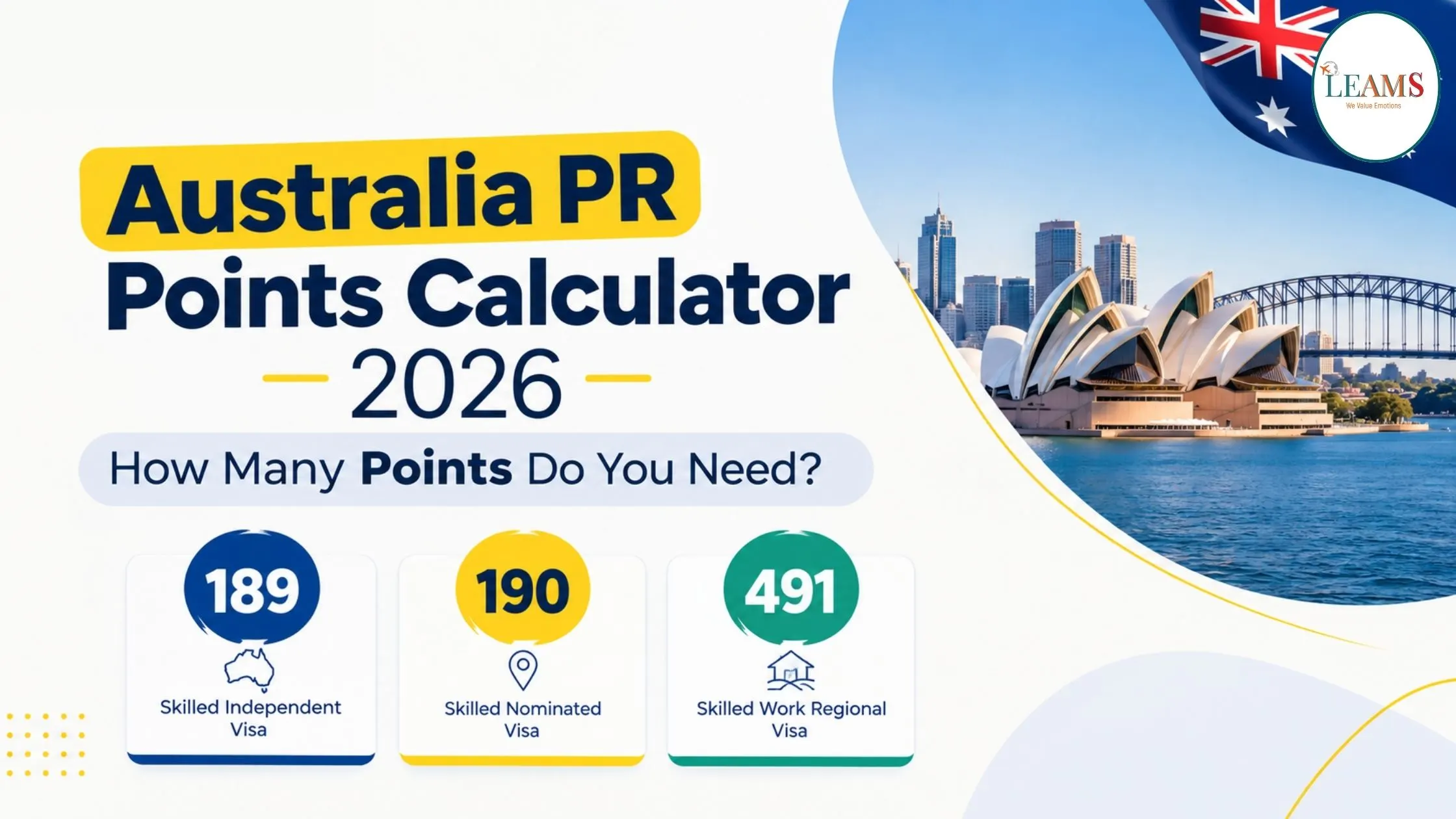
A strong profile isn't only a high number — it's the right number matched to the right visa. Subclass 189 (independent) gets no state bonus and generally needs the highest scores to get invited. Subclass 190 (state nominated) adds 5 points but means matching a specific state's occupation demand. Subclass 491 (regional) adds 15 points and, right now, is one of the more realistic routes for borderline profiles.
Ask yourself: Is your whole strategy built around 189 alone, or have you actually compared your points across all three pathways?
The Real Takeaway
A "strong" PR profile was never about clearing 65 points. It's about knowing exactly where every point comes from, what you're missing, and which pathway your number actually fits. Most people who get stuck in the pool for months, or get rejected outright, don't have a weak profile — they have one nobody ever properly checked.
Start with LEAMSS' Australia PR points calculator to get your baseline number. It'll tell you your score. It won't tell you which of these six areas is quietly holding you back, or which pathway genuinely fits your case — that's the part LEAMSS can walk you through before you lodge an EOI and start the clock.
📞 7718882427
🌐 www.leamss.com
📧 Ladhani@leamss.com
📍 Thane