| Quick Summary (TL;DR) :- The minimum score to enter the SkillSelect pool is 65 points, but actual invitation rounds for competitive occupations regularly close well above that. Points come from age (max 30), English ability (max 20), skilled employment (max 20), education (max 20), plus smaller categories like partner skills, regional study, and community language ability. Subclass 189 (independent) gets no bonus points and generally needs the highest score. Subclass 190 (state nominated) adds 5 points. Subclass 491 (regional) adds 15 points. The 2026-27 Federal Budget, delivered on 12 May 2026, confirmed the government will reform the points test to prioritise younger, more highly educated, higher-skilled applicants with stronger English — but the detailed mechanics have not been released yet. A consultation paper was expected around June 2026, with draft legislation by December 2026, and the new points test is scheduled to commence from 1 July 2027. Invitations already issued under the current points system will be honoured under transitional arrangements — the reform won't retroactively affect people already invited. Separately, salary threshold updates took effect on 1 July 2026 for employer-sponsored visas — but this is a different change from the points test itself, and the two are often confused. |
Why "How Many Points Do I Need" Doesn't Have One Simple Answer
If you've searched this question, you've probably noticed the answers online don't agree with each other. That's because the real answer depends on three separate things: which visa subclass you're applying for, which occupation you're nominated under, and when you're applying — because the system itself is currently in a confirmed, active state of change.
Let's go through what's fixed right now, what's genuinely in motion, and how to plan around both.
The Points Test, As It Currently Stands
Australia's skilled migration points test scores applicants across several factors. Age is worth up to 30 points, peaking for applicants aged 25 to 32, and reducing in steps until eligibility ends entirely at 45. English language ability is worth up to 20 points, with Superior English earning the full amount. Skilled employment experience, both in Australia and overseas, is worth up to 20 points depending on years of relevant, assessed experience. Educational qualifications can add up to 20 points, with a PhD attracting the highest score.
Beyond these core categories, smaller amounts are available for things like a partner's skills and English ability, study in a regional area, a Professional Year program, and demonstrated proficiency in a community language.
The minimum score required just to enter the SkillSelect pool is 65 points. But reaching 65 only makes you eligible to be considered — it doesn't guarantee an invitation. For competitive, high-volume occupations like software engineering, accounting, and general ICT roles, realistic invitation rounds have been closing well above the minimum, sometimes into the 85-95+ range, while less competitive or regional-priority occupations can see invitations at scores much closer to 65.
How 189, 190, and 491 Actually Differ
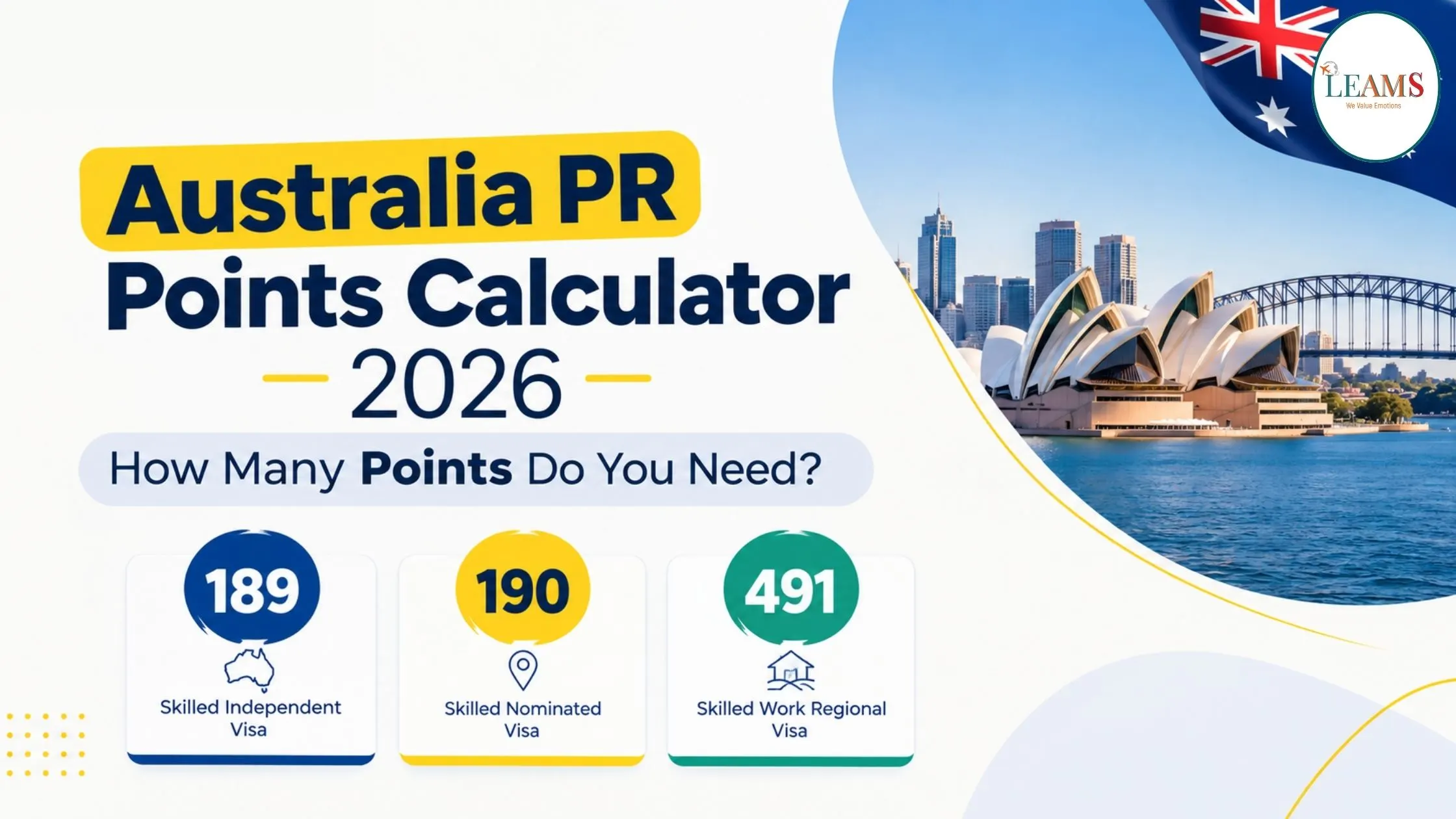
Subclass 189 (Skilled Independent) doesn't require a state nomination or an employer, and it carries no bonus points. Because of that, it tends to need the highest overall score, since you're competing purely on your own profile.
Subclass 190 (Skilled Nominated) requires a state or territory to nominate your occupation, and in exchange, it adds 5 points to your total score. The trade-off is that your occupation needs to match what a specific state is actively prioritising that year — not every occupation is open in every state.
Subclass 491 (Skilled Work Regional) requires nomination by a state, territory, or eligible family member in a designated regional area, and it adds the largest bonus of the three — 15 points. It also opens a pathway to permanent residency through Subclass 191 after meeting residence and income requirements over a set period.
Because of these bonus points, a borderline applicant who wouldn't clear the bar for 189 independently might comfortably clear it through 190 or 491 — which is why comparing your score across all three pathways matters more than fixating on one.
What the 2026-27 Federal Budget Actually Confirmed
This is where a lot of confusion exists online, so it's worth being precise. In the Federal Budget delivered on 12 May 2026, the Australian Government confirmed its intention to reform the permanent skilled migration points test — described as an effort to "optimise" the system toward younger, more highly educated, and higher-skilled applicants with stronger English ability. This reform has been described by several migration policy commentators as one of the most significant changes to the points system in over a decade.
What the Budget did not do is release the detailed new scoring mechanics. As of the Budget announcement, the specific point values, new categories, or weighting changes have not been published. A consultation paper was expected around June 2026, to be followed by draft legislation by December 2026, with the new points test currently scheduled to take effect from 1 July 2027.
Separately, and this is the detail that trips up a lot of applicants: salary threshold indexation for employer-sponsored visas took effect on 1 July 2026, affecting nomination applications for visas like the Skills in Demand visa (Subclass 482). This was a routine annual adjustment to minimum salary figures, not a change to the points test itself. The points test used for 189, 190, and 491 remained unchanged through mid-2026, even though headlines sometimes conflated the two.
What's Likely to Change, Based on Government Statements
While exact mechanics aren't public yet, the government's own language gives some directional signal. Applicants with more Australian-based skilled work experience, younger age profiles, and stronger English are generally expected to be viewed more favourably under a reformed system aimed at "long-term productivity and prosperity." Some migration commentators have also raised open questions about how partner points, education weighting, and existing categories might shift — but these remain speculative until the consultation paper and draft legislation are actually published.
The government has confirmed that invitations already issued under the current points matrix will be honoured, so applicants who've already received an invitation don't need to worry about the reform affecting an outcome already in motion.
What the 2026-27 Migration Program Numbers Tell Us
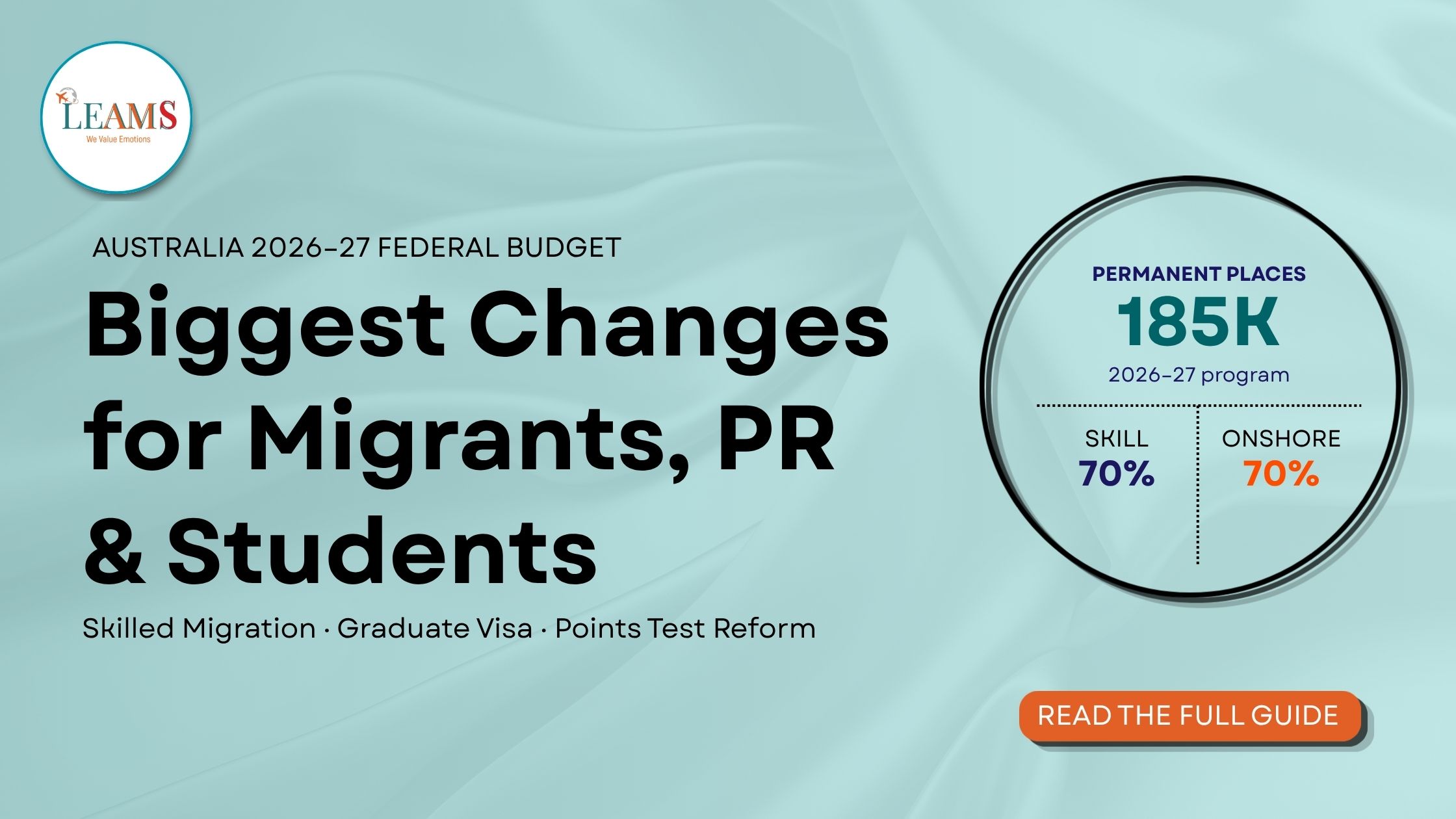
Alongside the points test announcement, the Budget confirmed the permanent Migration Program will remain at 185,000 places for 2026-27, unchanged for three years, with over 70% allocated to the Skill stream. Of the total program, roughly 129,590 places are going to onshore applicants against 55,110 offshore, reflecting a clear government preference for migrants already living in Australia. Net Overseas Migration is forecast to fall from 295,000 in 2025-26 to 245,000 in 2026-27 and 225,000 in 2027-28.
The Budget also committed $85.2 million toward faster skills assessments and occupational licensing, aimed at reducing workforce entry times by up to six months and supporting roughly 4,000 additional skilled workers annually — a practical measure that could meaningfully shorten the gap between arriving in Australia and starting skilled work.
What This Means for Your Own PR Planning
If you're currently eligible and sitting on a strong score, there's a real case for lodging your Expression of Interest sooner rather than later, simply because the current points structure is a known quantity, and anything invited under it is protected by the transitional arrangements already confirmed. If your score is borderline, it's worth comparing your position across 189, 190, and 491 rather than assuming independent is your only route, since the 5 or 15 bonus points on offer through nomination pathways can be the difference between waiting and being invited.
If your timeline naturally extends past mid-2027 regardless — because you're still completing a skills assessment, an English test, or qualifying work experience — it's worth keeping a close eye on the consultation paper and draft legislation as they're published, since the new system will specifically reward the profile characteristics the government has already flagged: younger age, stronger English, and higher education.
📞 7718882427 🌐 www.leamss.com 📧 Ladhani@leamss.com 📍 Thane
Note: Points test figures, visa subclass requirements, and reform timelines are set by the Australian Government and the Department of Home Affairs, and are subject to change as further details are released. Always verify current requirements directly through official government sources, or speak with LEAMSS for guidance specific to your profile.