|
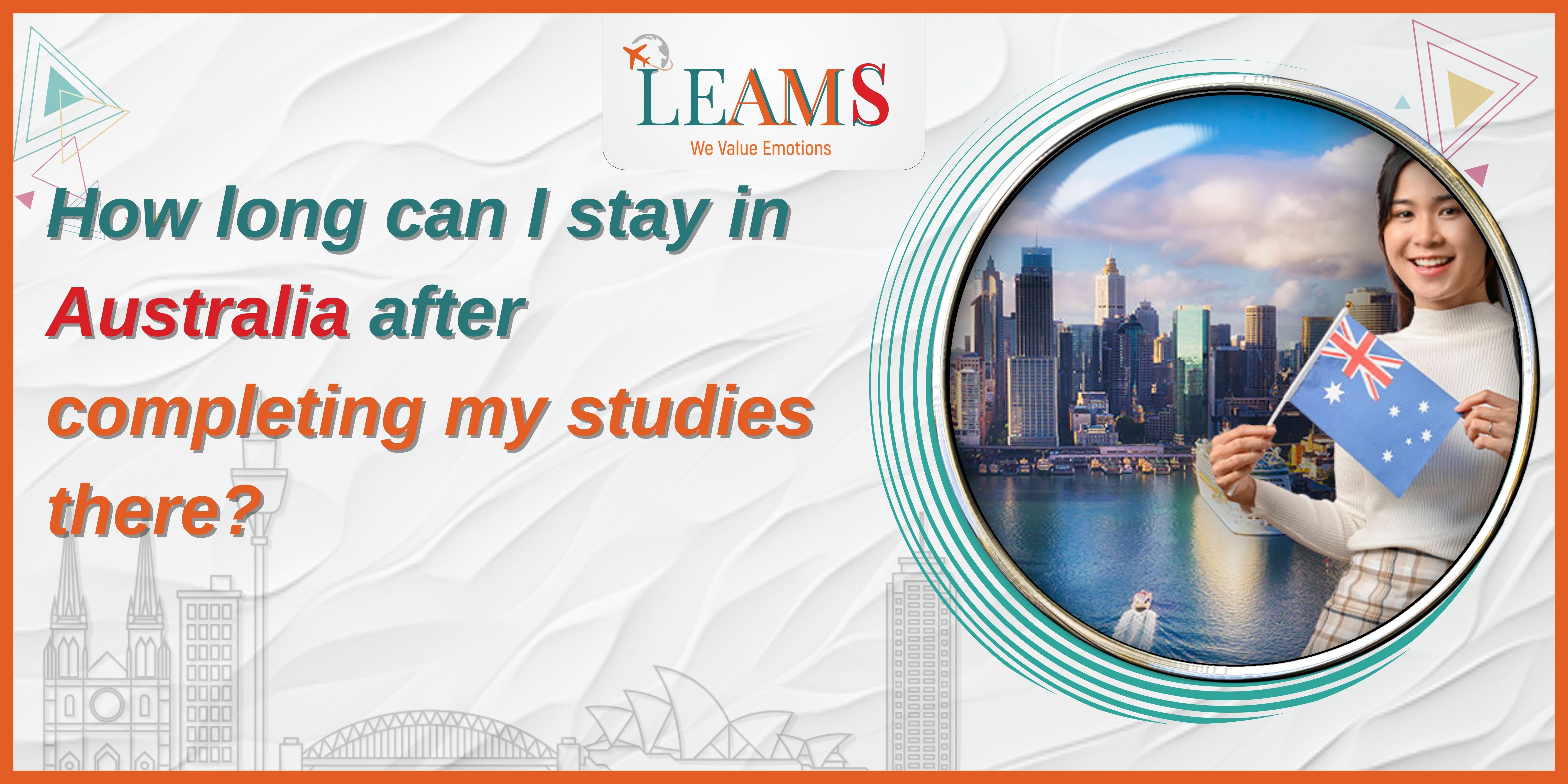
How long can you stay in Australia after study in 2026? Short answer: it depends on your course and your visa pathway. Your student visa already covers a short grace period after your course ends, and from there the Temporary Graduate visa (subclass 485) is the main route international graduates use to keep living and working in Australia. But 2026 has brought the biggest shake-up to this visa in years - higher fees, a stricter age cap, and tighter English-test rules. This guide breaks down exactly what has changed, what you're eligible for, and how to plan your next move. |
Once your course finishes, your student visa doesn't expire instantly - the government builds in a short buffer period based on when your course ends. Beyond that buffer, your real "stay length" depends on which post-study visa you move to. Here's the standard buffer window international students get after course completion:
| Course Completion Timing | Extra Days Permitted |
| Course longer than 10 months, ending Nov–Dec | 75–80 days |
| Course longer than 10 months, ending in October |
60 days |
| Course shorter than 10 months | 30 days |
These are the standard buffer days built into your student visa. Rules can be adjusted by the Department of Home Affairs at any time, so always confirm your exact dates on your visa grant letter or with a registered migration agent before making plans.
2026 Update: What's Changed for Post-Study Work Rights in Australia
If you last read about the 485 visa even a year ago, treat that information as outdated. Three major changes now shape every application:
1. The visa fee has more than doubled
The subclass 485 application charge jumped from AUD 2,300 to AUD 4,600 in March 2026, then rose again to AUD 5,750 for the primary applicant from 1 July 2026. Secondary applicants aged 18+ pay AUD 2,875, and dependents under 18 pay AUD 1,450. Passport holders from 13 eligible Pacific and Timor-Leste nations are exempt from the increase and continue paying the earlier rate.
2. The age limit is now 35 for most applicants
Since July 2024, the general age cap for the 485 visa sits at 35 years old at the time your application is received — down from the previous limit of 50. There are three exceptions: graduates of a Master's by Research or a Doctoral degree, and Hong Kong SAR / British National (Overseas) passport holders, all of whom can apply up to age 50.
3. English test rules are stricter
You now need an overall IELTS score of 6.5 (with no band below 5.5), or the equivalent in PTE Academic, TOEFL, CELPIP, or MET. The test must be taken in person - online or at-home formats are not accepted - and the result is valid for only 12 months before you lodge your application.
Two more details matter just as much: you must lodge your 485 application within 6 months of your course completion date, and since 1 July 2024 you can no longer apply for a new student visa from inside Australia if you already hold or have held a 485 visa - you'd need to leave and apply from overseas.
Australia 485 Visa Duration by Qualification (2026)
How long your post-study work visa lasts depends on what you studied and where:
| Qualification Level | Standard Visa Duration |
| Diploma / Vocational (Post-Vocational stream) | 18 months |
| Bachelor's Degree / Graduate Diploma / Graduate Certificate | 2 years |
| Master's Degree (by coursework) | 2–3 years |
| Master's by Research / Doctoral Degree (PhD) | Up to 4 years |
| Studied in a designated regional area | +1–2 years extra |
Best Postgraduate Courses to Study in Australia After Graduation
Many students extend their stay by moving into a postgraduate qualification rather than jumping straight to the 485 visa. Popular coursework options include:
| Postgraduate Course | Typical Duration |
| Graduate Certificate | 6–14 months |
| Graduate Diploma | 6–14 months |
| Master's Degree (by Coursework) | 1–2 years |
| Master's Degree (Extended) | 1–2 years |
| Doctorate (PhD) | Up to 4 years |
Prefer research over coursework? A 2-year research Master's or a research Doctorate of up to 4 years both count toward your
Prefer research over coursework? A 2-year research Master's or a research Doctorate of up to 4 years both count toward your study in Australia journey and open the door to the more generous 50-year age limit on your future 485 visa.
Eligibility Criteria for Postgraduate Study in Australia
-
A completed bachelor's degree (or equivalent) from a recognised institution
-
Academic transcripts, certificates, and education documents
-
English proficiency evidence — IELTS, PTE, or TOEFL scores
-
Valid personal identification documents
-
Proof of relevant work experience, where applicable
-
A well-written statement of purpose / letter of motivation
Step-by-Step: How to Apply for the Subclass 485 Post-Study Work Visa in 2026
Step 1 — Confirm you're eligible.
You must be under 35 (or qualify for an exception), have completed a CRICOS-registered course of at least 92 weeks over a minimum of 16 months on a student visa, and hold valid health insurance.
Step 2 — Book your English test early.
Sit an in-person IELTS, PTE Academic, TOEFL, CELPIP, or MET test and aim for the required score well before your 6-month deadline, since results are only valid for 12 months.
Step 3 — Get your completion letter.
Ask your institution for an official completion letter showing your exact course end date — this is what starts your 6-month application clock, not your graduation ceremony date.
Step 4 — Arrange Overseas Visitor Health Cover (OVHC).
Your policy should start from the day your student visa expires. Note that OSHC (used during study) does not satisfy this requirement — you need OVHC.
Step 5 — Gather supporting documents.
This typically includes your passport, completion letter, English test results, health cover confirmation, and an Australian Federal Police check (or evidence you've applied for one).
Step 6 — Lodge your application via ImmiAccount.
Apply online within 6 months of your course completion date and pay the current visa application charge in full — this fee is non-refundable even if your application is refused.
Step 7 — Track your bridging visa and processing time.
Once lodged, most applicants are granted a Bridging Visa A, letting them stay and work lawfully while the 485 application is processed. Median processing time in 2026 runs roughly 9–18 months for straightforward cases.
Post-Study Work Visa Fees in Australia (Effective 1 July 2026)
| Visa Category | Applicant Type | Fee (AUD) |
| Temporary Graduate visa (subclass 485) — Post-Higher Education Work stream | Primary Applicant | 5,750 |
| Temporary Graduate visa (subclass 485) — Second Post-Higher Education Work stream | Primary Applicant | 2,265 |
| Skills in Demand visa (subclass 482) — Core Skills stream | Primary Applicant | 4,015 |
| Skills in Demand visa (subclass 482) — Specialist Skills stream | Primary Applicant | 4,015 |
| Student visa (subclass 500) | Primary Applicant | 2,500 |
Fees are set by the Department of Home Affairs and reviewed regularly, including a further annual indexation each 1 July. Always confirm exact figures on the official Visa Pricing Estimator before you pay.
Full Eligibility Checklist for the 485 Visa
-
Apply within 6 months of completing your studies
-
Complete a CRICOS-registered course totalling at least 92 weeks across a minimum of 16 calendar months
-
Be under 35 years old at lodgement (up to 50 for PhD, Master's by Research, or HK/BNO passport holders)
-
Hold valid Overseas Visitor Health Cover (OVHC)
-
Meet the English proficiency requirement — IELTS 6.5 overall, no band below 5.5, tested in the last 12 months
-
Complete your course in English at an Australian institution while holding a student visa
-
Note: a standalone diploma alone does not meet the Post-Higher Education stream requirement
From Post-Study Visa to Australian PR: What's the Realistic Pathway?
The 485 visa itself doesn't lead directly to permanent residency — but it buys you the most valuable thing for a PR application: genuine Australian work experience. While on a 485 visa, most graduates work on one (or more) of these tracks in parallel:
-
Building points toward the Skilled Independent visa (subclass 189) or state-nominated visa (subclass 190)
-
Securing employer sponsorship through the Skills in Demand visa (subclass 482) as a stepping stone to permanent employer-sponsored PR
-
Exploring regional pathways (subclass 491) if you studied or plan to work outside a major city
Because your points score is time-sensitive — both your age and your accumulated experience affect it — the earlier you apply for your 485 visa after graduating, the more runway you give yourself to build a competitive PR profile.
Planning your next move after graduation? Visa rules for 2026 are stricter and more expensive to get wrong. LEAMSS offers end-to-end guidance for the 485 visa, PR pathways, and study extensions — book a free consultation before your 6-month window closes.
Contact us here:
Whatsapp us at +91 77188 82427
Drop a mail at ladhani@leamss.com
Visit us at www.leamss.com